Mārama: The horrors of colonisation (in a crinoline)
Confronting, bloody, and brilliant - Moata shares her thoughts on new horror film, Mārama.

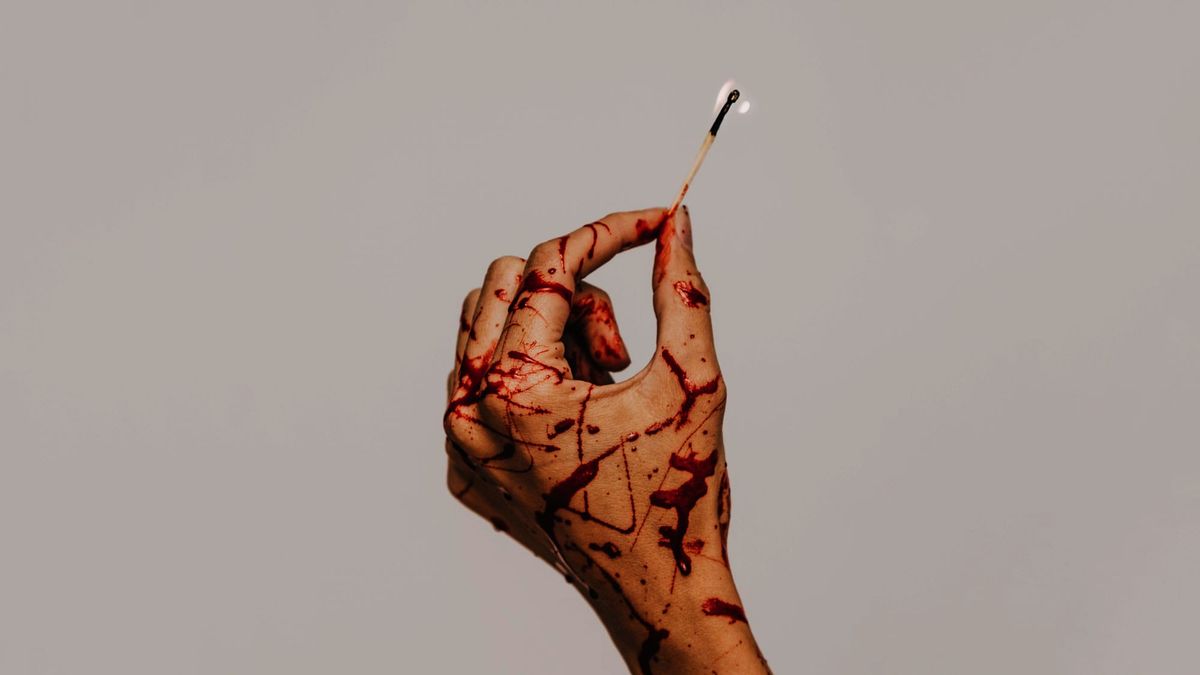
Late last year I saw a trailer for the movie Mārama and knew immediately I wanted to see it.
The only worry I had was that the trailer was so good I was skeptical that the movie could live up to it. What if they just smooshed all the best, moodiest, creepiest bits into the trailer and the film itself didn't stand up?
Well, this week I took myself on a movie date and, large glass of pinot gris in hand, settled in for what turned out to be a brilliantly unsettling time.
Look, terrible things just happen in Yorkshire
Mary Stevens (as played by Ariāna Osborne) is, from the beginning, a stereotypical Gothic heroine; dour, bonneted and crinolined, and a tad sickly looking. As she's rudely deposited off a coach somewhere in Yorkshire1 you could imagine her as a slightly darker-skinned Jane Eyre.
And sure enough, after a false start she soon arrives at the un-hallowed halls of Mr Rochester, or at least Toby Stephens, who played Mr Rochester in the 2006 BBC version of Jane Eyre. In Mārama he's playing a character with a tad more carefully applied charm than old Edward R but EVEN WORSE secrets. That the internet is losing its collective shit about the latest Wuthering Heights retread when this goth gem is ripe for the watching is... well, the way of things, I suppose.
As Lyric Waiwiri-Smith puts it in her review at The Spinoff "Forget Wuthering Heights – this is the masterpiece gothic film you should be checking out this week."
Toby Stephens is an actor that has always done well playing characters with an air of menace about them and as Nathanial Cole he is that chill you get at the back of your neck in human form. He soon convinces Mary, a bi-racial orphan raised by Pākehā who has come all the way to Yorkshire seeking information about her parents, that she should stay on as a governess for Cole's granddaughter, Ann. Ah yes, a big dark, spooky house in the middle of nowhere, an employer with an unknown agenda, a precocious child to mind - what more could a Gothic Governess want?
So far, so obvious. I'm sure this could be the set up for a perfectly serviceable but expected horror film that I would have enjoyed but Taratoa Stappard's film is not a cut-and-paste Goth outing. Mārama is a much, much more confronting, disturbing, and ultimately triumphant movie than its bare bones as presented here would suggest.
If the job advert says the role is for a "Dusky Maiden"... hard pass
For a start Cole is obsessed with things Māori. He speaks te reo, seemingly fluently, as does his granddaughter whom he has taught. He has Māori art, mementoes and artefacts throughout his house as well as an entire Māori whare on his grounds. He has acquired so many "exotic" cultural items the British Museum probably has him on speed dial2. Every time he utters a word in te reo Māori I want to punch him in the face. When he calls Mary's people "magnificent specimens" he makes my skin crawl.
We (meaning Māori) have all met a Pākehā person who is a bit too into "Māori-ness" and we all get that same feeling from them, like either they're trying to score right-on-liberal brownie points, or that there's just something "alluring" and "exotic" about us that they want proximity to for their own fucked up reasons and I HATE IT. Stappard has captured that feeling then reduced it down to its most intense colonialist flavour and shot it directly into the veins of the character of Nathanial Cole.
Things get spooky quite quickly and it only gets worse from there
Mary (who we later find was given the name Mārama at birth) has her own things going on. She is a haunted character, both in mien and in fact. She sees faces in mirrors that aren't there. She gets flashes of cognition when touching certain people. She receives messages in dreams.
I cannot say too much about the plot twists and dark revelations of the story (one of which is deeply upsetting to the degree that I found it hard to watch) that drive Mary to seek revenge on those who have done harm but I can say what effect it had on me.
That at a pivotal moment I found that I was clenching my fists so hard my nails were biting into my palms and, had there been light enough in the theatre to see them, my knuckles would have looked white.
That at I haven't felt so satisfied in the death of a male character in a horror movie since the ending of Midsommar.
That at the end of the movie as it faded to black my mind screamed "WHO MADE THIS?" and so I (and everyone else in the theatre, as it happens) sat through all of the (bilingual) end credits.
That afterwards I took myself to the loo because bladders gotta bladder and then sat there staring at the corner of the toilet stall walls for what felt like a long time, just sort of attempting to process.
That that night I had a nightmare in which I was still living with an abusive ex.
That since then I have been considering the nature of intergenerational trauma, particularly the kind that colonisation has wrought.
The past isn't in the past, it's right there in front of you
A refrain or motif of the film is "ka mua, ka muri/walking backwards into the future". This references the way that Māori conceive of time which is in direct opposition to the Pākehā way of thinking. In Māoridom your past is in front of you, as it has already happened and is therefore known. It is the future that is mysterious and which slips slowly past you one second at a time as you advance backwards into it. In the Pākehā worldview you look toward the future with the past lying behind you.
That this is the perfect metaphor for how our two cultures view the effects of colonisation has obviously not escaped Stappard. In order to process and heal from your trauma you must acknowledge and understand what was done to you. As the colonised, abused party Māori are invested in doing this. Every Treaty of Waitangi Tribunal case does this. We have waiata, whakatauki, books, poems, and art that does this. But how many times have I heard a Pākehā politician or commentator say that "that's all in the past". Yes, we know. WE CAN SEE IT FROM WHERE WE ARE NOW. Why can't you? Is it because you don't want to? Are you afraid of the ugliness, the abject horror you'll see if you look back there?
If this film feels confronting it's because it's supposed to be, as it pulls the horrors of our collective past into view on a large screen, with much blood and righteous vengeance.
The light and the dark twisted together into something new
As Mary becomes Mārama, she also embodies her name, which has several meanings including "light" or "understanding". In order to be free she must know who she is and understand what was done to her. She also has to acknowledge that, yes, due to her parentage the coloniser and the colonised live in her. This is something that many modern Māori including myself understand about ourselves but don't always know what to do with. This film gives us a way out of this conflict when Mārama, for this is who she is now, admits to this presence of the coloniser in her blood but also says that that is not who she is. She is her own person. I love a movie makeover when it's actually just an indigenous woman decolonising herself.
In doing so she embraces herself fully and she moves backwards into her future.
1 Look, I've been on the Yorkshire moors AND the Otago coast and you're not fooling me as to where this was shot - but this is a short and quickly forgotten quibble and I probably shouldn't have even bothered with this footnote, to be honest.
2 Not only is this an anachronistic comment to make because this film is set in the 19th century it's doubly bad because speed dial isn't even a thing any more. What can I say? I LIVE OUTSIDE OF TIME.